Why are there so many bad facilitators?
(And What Great Facilitation Actually Looks Like)
I’ve been quite underwhelmed lately when attending workshops and retreats – not because people didn’t know their topic, but because so much potential was lost through poor facilitation.
It’s rarely about lack of knowledge or overpromising. It’s about how the session is curated and facilitated. The process, not the content, often makes or breaks the outcome.
Too often, the facilitators missed out on key aspects, such as:
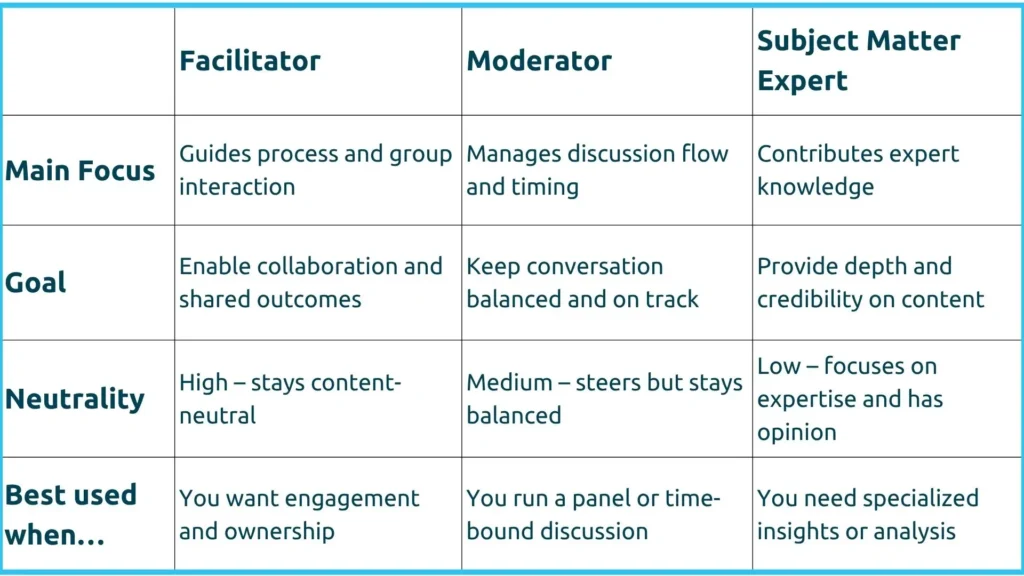
Be clear about your role:
One of the most common mistakes: not defining what role you’re actually taking on.
Are you the facilitator, moderator, or subject matter expert?
This will not only give the group transparency – it will also earn their trust, as they’ll understand whether you come as a neutral person or with a specific perspective.
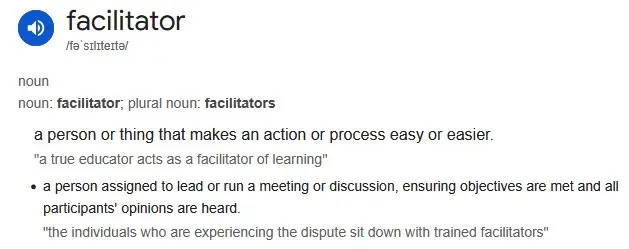
The word “facilitator” comes from the Latin facilis, meaning “easy” or “to make easy”.
A facilitator’s job is to make collaboration easy – guiding critical discussions and helping a group work together more effectivelyRegardless of your role, empathy and the ability to tolerate multiple perspectives are essential.
Facilitator vs Moderator:
When to combine the roles of facilitator and moderator?
Combining moderator and facilitator roles in a single person can work well if the setting allows. It can be effective in smaller or focused settings, but it depends on the complexity, goals, and audience dynamics of the session. The dual role works best when the tasks of guiding process (facilitation) and managing flow and interaction (moderation) align without compromising neutrality or attention to content depth.
Personally, today I can manage both roles with groups of up to 30 people – as long as the setting doesn’t require more than one facilitator. For example, if there are many breakout sessions or the group dynamics demand special attention for certain participants, it’s better to separate the roles.
I say today because this ability came with experience: I now look back on more than 12 years as a facilitator and about 14 years as a university lecturer, often guiding classes of around 30 students. That combination of practice, observation, and reflection taught me where my own limits are – and when combining roles truly works.
It works best when:
- You have small, aligned groups (e.g. project teams).
- The event is short or straightforward.
- You’re in hybrid/online settings with limited staff.
- You’re facilitating internal discussions with shared context
Avoid combining roles when:
- Sessions are large (e.g., conferences, multi-stakeholder dialogues)
- Sessions are high-stakes. (i.e. multi-stakeholder negotiations or dialogues)
- The topic is conflict-sensitive or politically charged.
- Hybrid settings require strong tech or participation management.
Personally, I avoid blending the two roles when complexity or neutrality are critical.
If you do both, preparation and role clarity are essential:
- Define the purpose clearly (decision, dialogue, alignment).
- Set and communicate ground rules early.
- Use tools (timers, speaking queues, polls) to balance participation
- Reflect afterward: Did both roles succeed?
- Discuss a plan B with your client: what if, after some time, you realize you need help? Can you bring in someone, or can the client offer support?
Teresa Widmer, former Head Swiss Entrepreneurship Programme at Swisscontact on working with me:
" Andreia consistently keeps us on track with the agenda while also making room for emerging topics that need to be addressed. She is a great co-creator when preparing a workshop – organised, goal-oriented, and committed to making it a success. Working with Andreia is always a pleasure, and I know I can rely on her to bring out the best in every group."
Teresa Widmer
Start smart: Enable interaction early:
Set the Tone for an Engaging Session
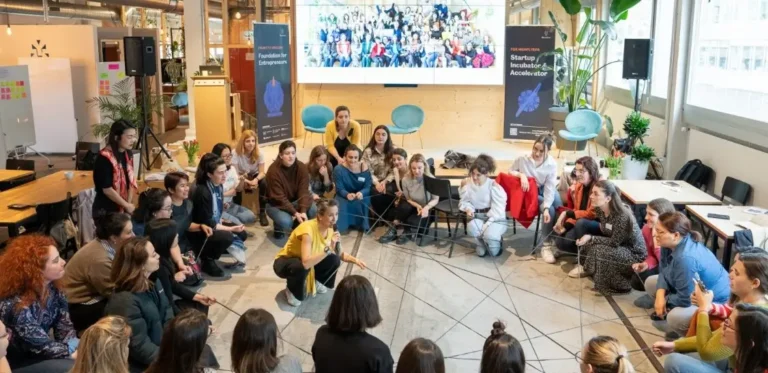
The way you start a meeting can define its entire dynamic. The earlier participants are involved, the more engaged and active they stay throughout the session. As a facilitator, your role is to set the stage – offering just enough context for everyone to understand the topic, but not so much that it limits open discussion or curiosity.
Too much input from the facilitator can trigger first-speaker bias, seniority bias, or expert dominance. What starts as a warm-up can quickly become a monologue – leaving participants passive and hesitant to contribute.
Creating space early on for participants’ voices encourages ownership, curiosity, and energy – exactly what makes a facilitated session come alive. To say it with Jamil Zaki’s words, a facilitator’s job is to be “the Person who can integrate diverse expertise, promote equitable contributions and cultivate trust. ”
I experienced this recently at a retreat: the person leading the wrap-up turned it into a 30-minute summary of their personal takeaways. Instead of sparking reflection, it killed momentum.
Participants leaned back, stopped engaging, and the opportunity for collective insight was lost. What could have been a truly facilitated closing – exploring open questions from the previous three days – became a shallow summary with unnecessary new input from one voice alone. He missed out on one important aspect, namely to “unlock a team’s collective intelligence” as Jamil Zaki explains in his HBR Article on Super Facilitators.
Andreia’s Pro Tip:
Personally, I avoid blending the two roles when complexity or neutrality are critical.
And if you do – discuss plan B with your client:
What, if after some time into the faciliation, you realize you need help?
Can you bring in someone, or can the client offer support?
The Most Common Interaction Mistakes:
1. Peer-groups are underused or overused:
Making small groups of 2 or 3 people early on, i.e. to have them share their own motivation or pain points, can be a great way to create interactive sessions.
However, this type of interaction requires active facilitation. Groups work well for engagement – but only if managed properly:
- Track time and cue rotations clearly so the next participant can share
- Ensure everyone remembers the guiding question. This is particularly important if, for example, you showed a slide and participants now move into breakout rooms or spread throughout the building. Either give them a handout or remind them to write down or take a picture of the slide you’re showing. I’ll bet there’s always at least one group that ends up talking about something completely different because they forgot your task. 😊
2. Group composition isn't aligned with purpose:
- Keep groups stable for deep reflection.
- Mix them for diverse perspectives.
If your goal is to build knowledge and foster deeper discussion, it makes sense to keep the same groups throughout the day – and perhaps give participants some autonomy in how the groups are formed.
If, on the other hand, you want to bring in as many perspectives as possible, make sure that people change groups and “everyone works with everyone.”
There’s no one-size-fits-all approach to group building, but it’s worth taking time in advance to reflect on why and how you form the groups – and what outcome you want to achieve.
3. Peer work that is not integrated:
Once you reconvene, you should at least wrap up the topic or integrate it into the next session. If small-group discussions aren’t connected back to the main session, participants disengage. Always harvest the outcomes – even briefly.
This can feel like a time trap if you have many small groups and want everyone to talk – in that case, you could also:
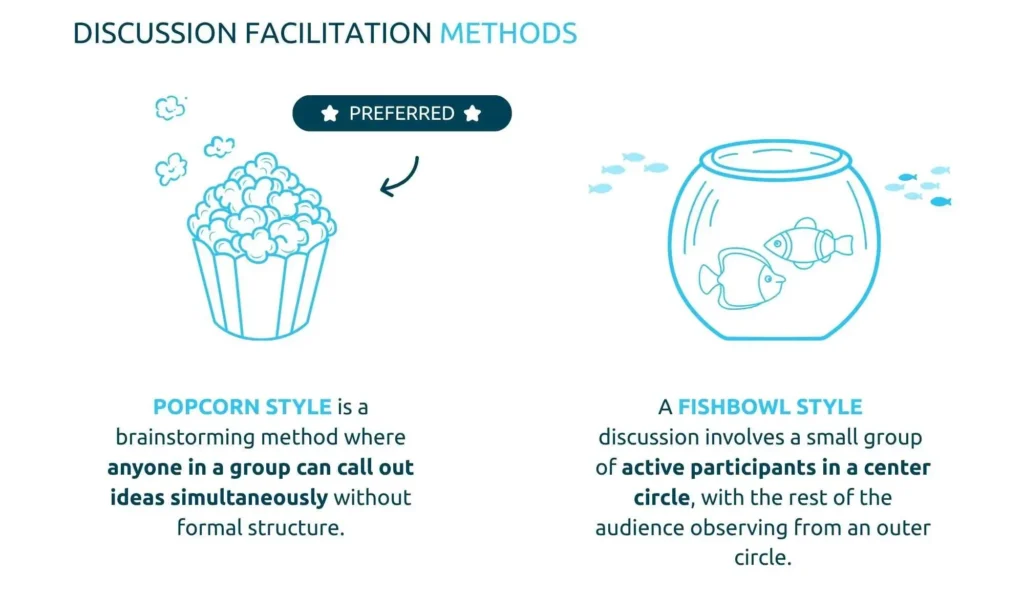
- Share Popcorn-style (vs. Fish Bowl)
- Select one or two groups to share highlights.
- Use a wall or flipchart for each group’s key takeaways.
Good facilitation is not about being the smartest in the room – it’s about making others think, connect, and contribute.
Whether you’re a facilitator, moderator, or expert – clarity, neutrality, and process design make all the difference.
"I’ve hired Andreia again and again over the years because she has always been the right facilitator for our needs. She creates a space where people feel heard, engaged, and motivated to share, and where results are both visible and clear."
Teresa Widmer
Teresa Widmer, former Head Swiss Entrepreneurship Programme at Swisscontact on our year long collaboration.
Let’s talk!
If you’re planning an important workshop, strategy retreat, or team offsite and want to make sure it delivers real outcomes – let’s talk.
I help organizations design and facilitate sessions that engage people, unlock ideas, and create ownership.
Reach out to me if you want your next workshop to actually work.
I’m a facilitator, lecturer, and leadership coach with over a decade of experience helping teams and organizations collaborate more effectively.
I combine my background in strategy, positive psychology, and higher education to design sessions where people connect, contribute, and create impact – without endless slides or one-way conversations.
A sneak peak on companies I've supported as a facilitator over the past years
Evolution needs action, not autopilot. Get my occasional inputs – keynotes, projects, events, and sharp insights at the intersection of leadership, innovation, and strategy.