
The Art of Handling Questions - A Professional's Toolkit
Questions are tools.
Knowing how to receive them, redirect them, and wield them yourself is one of the most underestimated skills in when communicating in professional life.
A question is never just a question. Behind every inquiry lives a need - for clarity, for connection, for reassurance, or sometimes simply to be heard.
In both professional and personal life, we are constantly on the receiving end of questions.
From a colleague asking about a project deadline, to a client probing your expertise under pressure – how we handle these moments defines how we are perceived, and more importantly, how we make others feel.
Most of us were never taught to handle questions well. We were taught to have answers.
But those are not the same thing.
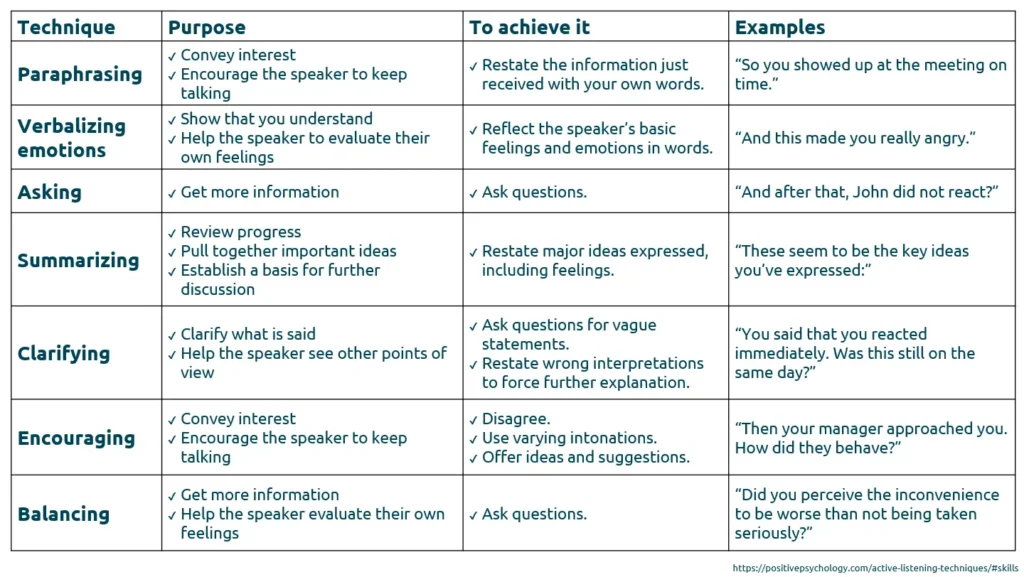
We were not taught to actively listen to others. There is an entire toolkit available to us that turns handling questions from a reactive scramble into a deliberate, confident act.
1. Be Prepared
Reflect which questions could be asked before your presentation or pitch.
The foundation of handling any question well is preparation. This does not mean memorizing scripts – it means knowing your subject deeply enough that you can respond to the unexpected without panic.
Before any presentation, meeting, or difficult conversation, spend time thinking not just about what you want to say, but about what others might ask.
Anticipating questions is a form of empathy. It requires you to step into the other person’s perspective and ask: what do they not yet understand? What concerns them? The more thoroughly you do this, the more composed you will appear when the real questions arrive.
“Thank you for addressing this important aspect, I had not brought it up yet but have a back-up slide ready to explain this method.”
2. Pause First
When a question lands, there is enormous social pressure to respond immediately – as if hesitation signals incompetence. In reality, the opposite is true. A well-timed pause communicates that you take the question seriously. It gives you a moment to hear not just the words, but the underlying concern.
Remember: Silence is not weakness. It is the sound of thinking.
Practice taking two full seconds before answering any significant question. You will be surprised how dramatically this changes the quality of your responses – and how it shifts the way others perceive you.
3. Rephrase & Paraphrase
If needed: before answering, restate the question in your own words. This confirms you understood correctly, buys you a moment to think, and shows the questioner they have been genuinely heard and understood.
In high-stakes situations – interviews, negotiations, public Q&As – this technique is invaluable.
“So, if I understand correctly, you’re asking whether our approach accounts for X – is that right?” A single sentence like this can transform the dynamic of an entire conversation.
Paraphrasing also lets you gently reframe. If a question was posed in an accusatory or misleading way, restating it neutrally allows you to engage with the substance without accepting a hostile framing.
4. Use Questions to Activate and Initiate Discussion
Questions are not only reactive – they are among the most powerful tools for opening a conversation.
A well-placed question at the start of a meeting signals curiosity, invites participation, and sets a collaborative tone. Rather than launching into a monologue, try: “Before I share my thinking, what’s already on your minds?”
In group settings, initiating with a question democratizes the space. It signals that this is a dialogue, not a performance – and people engage far more deeply when they feel their input matters from the outset.
5. Postpone When Necessary
Not every question demands an immediate answer – and pretending otherwise leads to rushed, half-formed responses that may damage credibility.
When a question is complex, or when the timing is simply not right, it is entirely acceptable to postpone.
Do so with clarity and commitment: “That’s an important question – I want to give it a proper answer. Can I come back to you by end of week?” This is not evasion; it is professionalism. What matters is that you follow through.
6. Question the Questioner
One of the most underused moves in any conversation is to respond to a question with a question of your own – not to deflect, but to genuinely understand what is being asked, and why.
“What’s prompting that question?” or “Can you tell me more about what’s behind that concern?” often reveals that the real issue is quite different from the surface inquiry.
This technique also rebalances high-pressure dynamics. When someone attempts to put you on the defensive, turning it around – calmly and curiously – shifts the conversation from reaction to dialogue.
7. Acknowledge the Other Person's POV
Before offering your own perspective, acknowledge that you have genuinely registered where the other person is coming from.
This does not mean agreement – it means recognizing that their view has internal logic, and that you respect it enough to engage with it seriously.
Phrases like “I can see why that would be a concern” lower the temperature of any conversation and make it far easier for the other person to stay open to what you say next. Acknowledgement is not concession – it is connection.
8. Allow the Opponent to Give Direction
In negotiation and in difficult conversations alike, there is unexpected power in inviting the other side to lead.
“What would a good outcome look like to you?” or “How would you like to proceed?” can completely change the energy in a room. People who feel heard and in control engage far more constructively.
This is not capitulation – it is strategic generosity. You are not surrendering your position; you are gathering information and building goodwill at the same time.
9. Define Ambiguous Terms
Many arguments are not really about substance at all – they are about language. When a question contains an ambiguous or emotionally loaded term, define it before you answer.
This is especially critical in professional settings where technical and non-technical people use the same words to mean very different things. Clarity of terms is clarity of thinking.
And it’s never too late to ask: “When we started, I thought with agile you mean something different – now that I heard you, I realize we were using the same term for a different context. Could you kindly explain what agile work is for you?”
10. Set Rules
In any structured setting – a Q&A, a workshop, a tense meeting – you have the right to establish parameters upfront. “I’ll be happy to take questions at the end” or “Feel free to interrupt whenever you have a question” create productive conditions and a flow for dialogue.
Setting rules is not about control – it is about creating a shared framework within which everyone can participate fairly. Done calmly and early, it is welcomed rather than resented.
11. Set Boundaries or Disengage (Last Resort)
Sometimes a question is not asked in good faith.
Sometimes a conversation has run its productive course and is now cycling into repetition or hostility. In these situations, the most professional move is to name it clearly and calmly: “I think we’ve covered this ground thoroughly. I’m not sure continuing serves either of us right now.”
Setting a boundary is not rudeness – it is self-respect. And disengaging, done with dignity rather than frustration, can be more powerful than any answer. It signals that you know your own worth, and that you will not be drawn into an exchange that benefits no one.
Your eleven-strategy quick reference:
- Be prepared – anticipate before you arrive
- Pause – let thinking precede speaking
- Rephrase & paraphrase – confirm, then reframe
- Initiate discussion – questions open doors
- Postpone – buy time with commitment
- Question the questioner – go deeper
- Acknowledge their POV – before your own
- Let them give direction – strategic generosity
- Define ambiguous terms – precision over assumption
- Set rules – create the right conditions early
- Set boundaries or disengage – last resort, with dignity
Questions are the connective tissue of human understanding. Handled well – with preparation, curiosity, and these eleven strategies in your back pocket – they become one of the most powerful instruments available to any communicator.
The next time someone asks you something difficult, treat it as an opportunity rather than a threat. Pause. Listen for what’s really being asked. And choose your move deliberately.
This post covers the communication and presentation skills professionals rarely learn formally – from handling tough Q&A sessions and negotiating under pressure, to facilitating workshops and building executive presence. Whether you’re preparing for a keynote, board meeting, or job interview, these strategies apply.

Work with Andreia
Andreia is a High Impact Presentations instructor (Dale Carnegie certified), a TEDx speaker and keynote speaker – she doesn’t just teach presentation skills, she lives them.
She regularly delivers presentation skills trainings, public speaking workshops, and one-on-one coaching for professionals, executives, and teams who want to communicate with greater confidence, clarity, and impact.
Whether you need a half-day team workshop, a corporate presentation skills programme, or an individual coaching session to prepare for a high-stakes talk, Andreia brings a proven, human-centred approach that gets results.
✦ Presentation skills trainings for teams & organisations
✦ Individual coaching for speakers, leaders & executives
✦ Keynote facilitation & TEDx-style talk development
Evolution needs action, not autopilot. Get my occasional inputs – keynotes, projects, events, and sharp insights at the intersection of leadership, innovation, and strategy.